
Residential Rehabilitation in Southfield
Residential rehabilitation brings therapy, nursing and daily support together in one homelike setting. It is offered on our Southfield campus, alongside our outpatient therapy clinic.
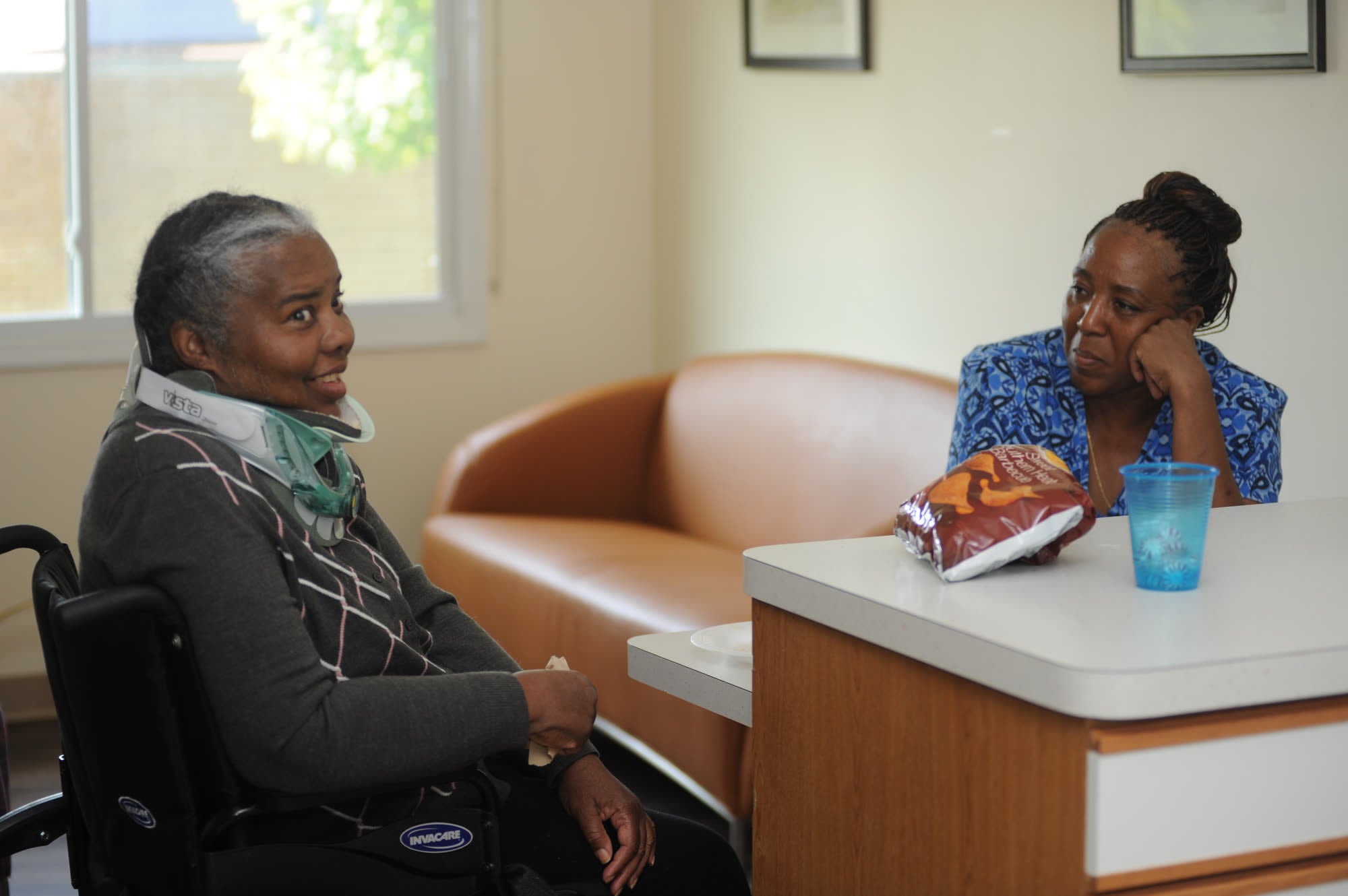
Dr. Ruza on How Our Program Works
Filmed during the COVID-19 pandemic.
A complete program under one roof
Dr. Theodore Ruza, DO · Medical Director
Dr. Ruza on the therapies and the medical and psychiatric care that work together here, staff on site around the clock, and why families and guardians are part of every team meeting.
What is Residential Rehabilitation?
Residential rehabilitation is a form of brain injury care in which a person lives on site while taking part in a structured rehabilitation program. Instead of traveling to appointments, therapy, supervision and everyday support are organized around the place where the person lives, so practice can continue through the whole day.
Irvine has offered residential care since it began in 1986 as Irvine AFC, an adult foster care facility with a Closed Head Injury program. In 1992 it became Irvine Head Injury Home, providing cognitive rehabilitation and residential care for persons with closed head injuries. Today, assisted living apartments, sub-acute rooms and adult foster care homes at the Southfield campus are at the heart of our in-patient care.
Residential programs are typically considered when a brain injury affects safety, memory, behavior or the ability to manage daily life without support. The right level of care depends on the person, and our multi-disciplinary team works with each resident and family to decide what fits.
When residential rehabilitation may be considered
- Living at home is not yet safe without supervision or support
- Memory, judgment or planning problems make daily routines hard to manage
- Several therapies are needed and daily travel to appointments is not practical
- Behavior or mood changes after injury need consistent, structured support
- Medical or nursing needs continue alongside rehabilitation
- Family caregivers need a stable setting while recovery continues
What to Expect
- Therapy and daily support delivered where the person lives
- Assisted living apartments, sub-acute rooms and adult foster care homes on the Southfield campus
- A multi-disciplinary team that may include nursing, therapy, case management, counseling and social work
- A homelike environment rather than a hospital ward
- A plan built around each person's needs and physical condition, reviewed as recovery continues
Our Approach to Residential Rehabilitation
Initial Assessment
Before admission, the team learns about the injury, medical history, current abilities and the goals of the person and family. This helps decide which level of residential care is the best fit.
Personalized Plan
Each resident's plan draws on the disciplines they need, which may include physical, occupational and speech therapy, nursing, recreational therapy, counseling and case management. We don't employ cookie cutter, one-size-fits-all strategies.
Ongoing Support
Progress is reviewed regularly and the level of support can change as needs change. Our continuum of rehabilitation and residential services means a person can move toward more independence on a campus they already know.
Benefits
Practice Throughout the Day
Skills worked on in therapy can be practiced in real daily routines, such as meals, self-care and household tasks.
A Homelike Setting
Care is provided in apartments, rooms and homes designed to feel like home rather than a clinic.
One Coordinated Team
Nurses, therapists, case managers, recreational therapists, social workers, counselors and residential care assistants work as one team.
A Continuum of Care
Residential, semi-independent apartment and outpatient programs make it easier to adjust care over time.
How It Typically Unfolds
Consultation and Tour
There is no charge for a consultation, and families are welcome to schedule a tour of the Southfield campus to see the residential settings in person.
Admission and Settling In
The team completes its assessments, introduces the daily routine and begins building the plan with the resident and family.
Active Rehabilitation
Therapy and daily support work together. Goals are reviewed and updated as abilities change.
Planning the Next Step
When ready, the team helps plan the next step, which may be more independent living on campus, outpatient care or a return home. Timelines differ for every person.
Residential settings on our campus
The Southfield campus at 25700 Lahser Road includes assisted living apartments, sub-acute rooms and adult foster care homes. These settings allow the team to match the level of support to each person, from close supervision to greater independence.
In 2003 Irvine added a special needs unit for individuals requiring nursing with physician supervision. For people who are ready for more independence, the semi-independent apartment program allows residents to receive therapy in their own apartment.
Irvine Neuro Rehabilitation is licensed by the State of Michigan, and this residential Brain Injury Specialty Program is accredited by CARF, the Commission on Accreditation of Rehabilitation Facilities.
Common Questions About Residential Rehabilitation
Who is residential rehabilitation for?
It is for people whose brain injury makes it hard to live safely or independently without support, or who need several therapies at once. Irvine serves adults and children, men and women, with mild and severe injuries. A consultation helps decide whether residential care is the right fit.
What does the living environment look like?
Residential care takes place in assisted living apartments, sub-acute rooms and adult foster care homes on our Southfield campus. The environment is designed to be homelike.
Can our family visit the campus first?
Yes. You can schedule a tour by calling (248) 415-2500, and there is no charge for a consultation.
How long do people stay?
Length of stay depends on the person's needs, goals and progress, and on what coverage allows. The team reviews the plan regularly and discusses next steps with the resident and family.
How are referrals made?
Referrals can be faxed to (248) 415-2510. You can also call (248) 415-2500 to talk with the team about next steps.
Related Services
Related
Semi-Independent Apartment Living
Your own apartment on campus, with therapy and support close at hand.
Related
Nursing Care
Health monitoring and prescribed medication support within rehabilitation.
Related
Traumatic Brain Injury
How rehabilitation can support recovery after a traumatic brain injury.
Ready to Learn About Residential Rehabilitation?
Call (248) 415-2500 to ask questions, request a free consultation or schedule a tour of our Southfield campus.
Book an Appointment